You can use oddPOD to deliver creative work for other businesses: product concepts, apparel artwork, garment mockups, listing assets, promotional content or printable PDFs. A service becomes an offer when you define the deliverables, inputs, revision allowance and responsibilities, not simply the software you use.
A client may already have an audience, a shop and a product idea. They need help getting the creative work finished. Your role is to turn that need into a small, understandable project with a named approver and a clear end point.
oddPOD can support your production workflow, but it is not a client-contract, invoicing or approval portal. Manage those parts through your agreed process. Do not promise shared access to your workspace, automatic storefront publishing or ongoing account management unless you have separately arranged and verified them.
Choose the right kind of engagement.
These models describe how work is organized. Price from the actual scope, effort and responsibilities; the table does not imply a recommended rate.
On a small screen, scroll the table sideways to compare the details.
| Model | Good fit | Define before starting | What ends the work |
|---|---|---|---|
| Fixed project | A known set of artwork or files | Deliverables, inputs, revisions and approver | Approved handoff of the specified files |
| Concept exploration | A client deciding what to make | Number of directions and decision criteria | A chosen direction and next-step brief |
| Recurring support | A brand with repeat creative needs | Capacity, request limits and turnaround | A defined period and delivery record |
| Catalog refresh | Existing products needing consistency | Product list and fields/assets to change | Reviewed replacements for the agreed catalog |
Nine services with a concrete deliverable.
Start with the service you can deliver confidently. Add adjacent work when the client has a real need and the extra scope is clear.
From brief to apparel concept
A brand-to-product package
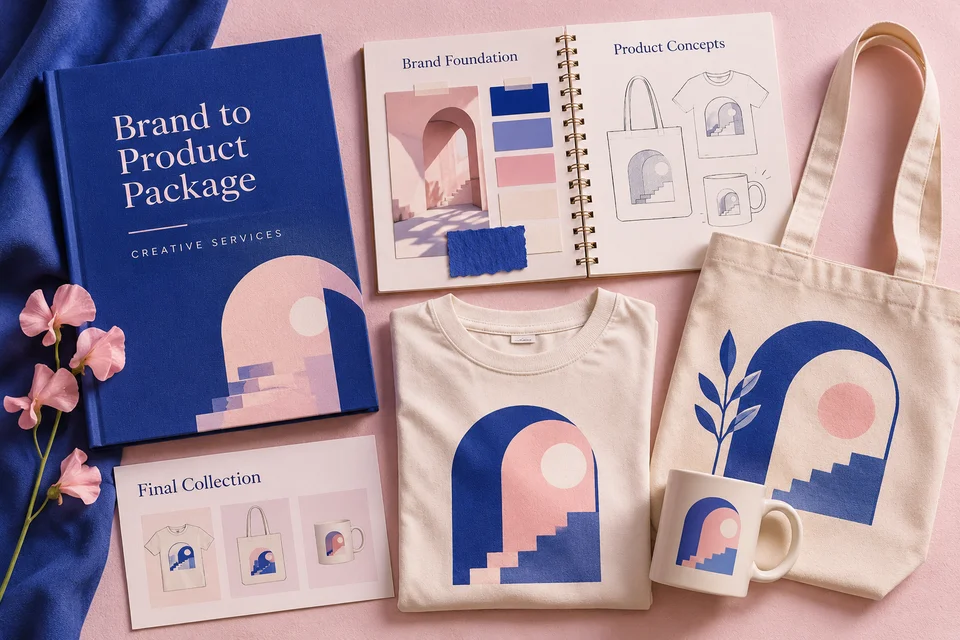
Help a small business translate an existing brand into apparel. A defined package might include two visual directions, one selected design and a set of garment presentations. A café, bookstore or community business can be the client; you do not need to promise a complete brand strategy engagement.
Write a package with a fixed number of concepts, one final design, a stated revision allowance and a named file handoff.
How to prepare this idea
Collect approved brand assets, the intended audience, garment preferences and one decision-maker. Organize the brief in oddPOD, build editable artwork in Studio and prepare the agreed mockups. Keep brand approval separate from production approval.
The client’s sales setup, payment handling and garment orders remain outside the creative package unless explicitly scoped. Offer the provider-draft preparation as a separate, reviewed step if it is needed.
Present approved designs consistently
A garment-mockup production service
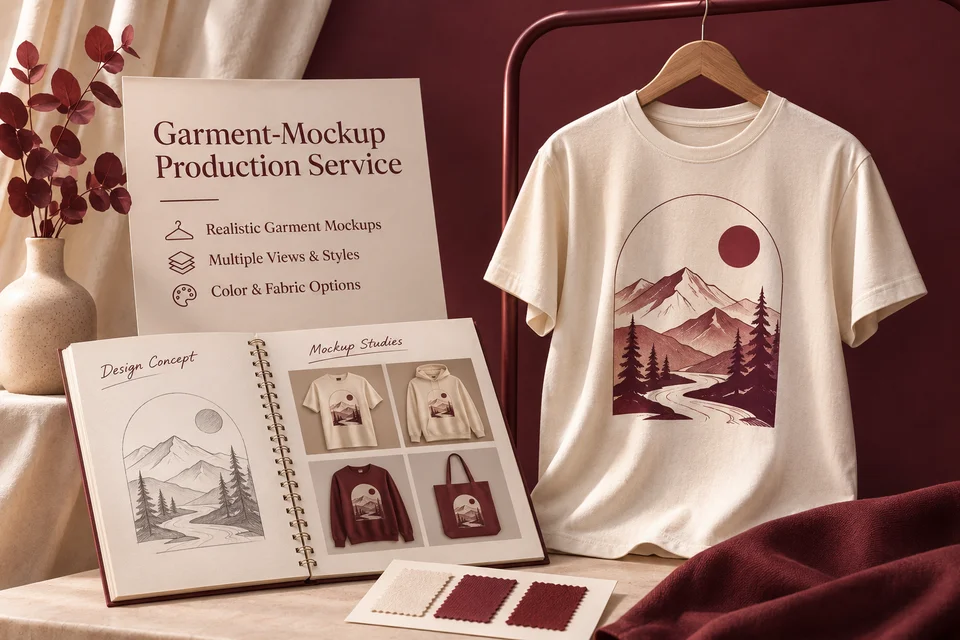
An apparel seller with finished designs may need a consistent image set for each product. Define the number of designs, garment views, colors and output files. Three views for each of four designs is a different job from twelve individually art-directed scenes.
Produce one sample set from artwork and garment photography you can use, and define how many outputs each additional design includes.
How to prepare this idea
Use suitable garment photographs, calibrate placement and masks in the Mockup editor, and build a reusable set. Review the fabric blending, print scale and every rendered tile before exporting JPG or PNG files. Obtain usable photos and permission for the intended use; a client logo alone is not the whole input.
Deliver images matched to an agreed product list. Mockups are presentations, not physical samples or proof of print quality. Keep custom photography, unsupported product types and storefront upload outside the package unless separately arranged.
Make the product understandable
A listing-preparation package
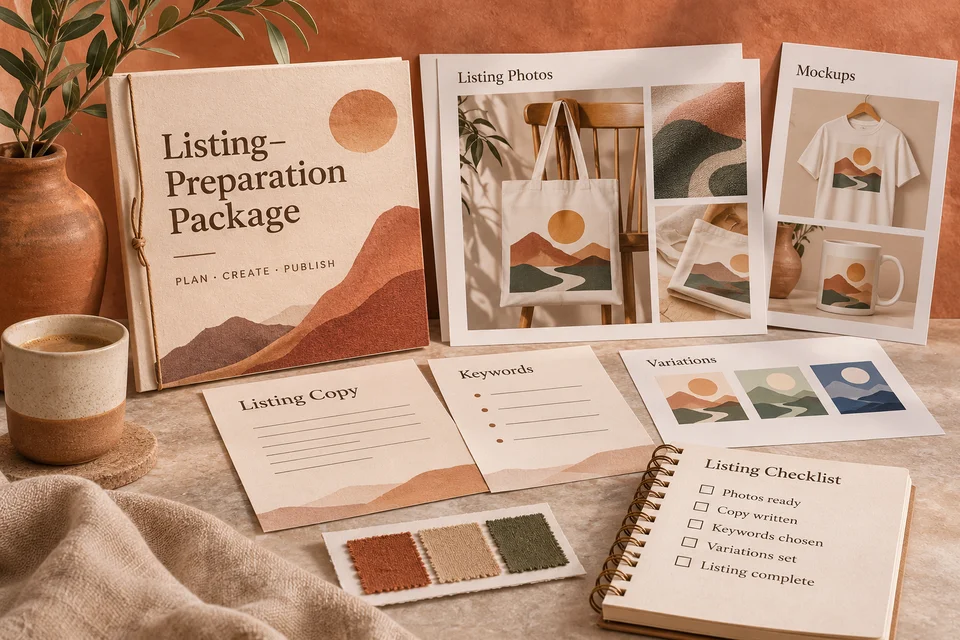
A seller may have a product but lack a coherent title, description and image sequence. Offer a package for a specific number of products with a defined list of copy fields and images. Your value is organizing accurate information for the buyer, not guaranteeing search placement or sales.
Choose one product and make an input checklist that separates confirmed facts from information the client still needs to supply.
How to prepare this idea
Collect verified materials, sizes, variants, care information and delivery facts from the client or provider. Prepare the product record, edit listing copy and assemble the agreed image set in oddPOD. AI writing is optional paid usage and still requires a factual review.
Have the client approve product facts and the final package. Publishing in the storefront, setting policies and answering buyer questions remain separate. A later catalog refresh can be a new project.
Connect the product to a message
Promotional content for a product launch
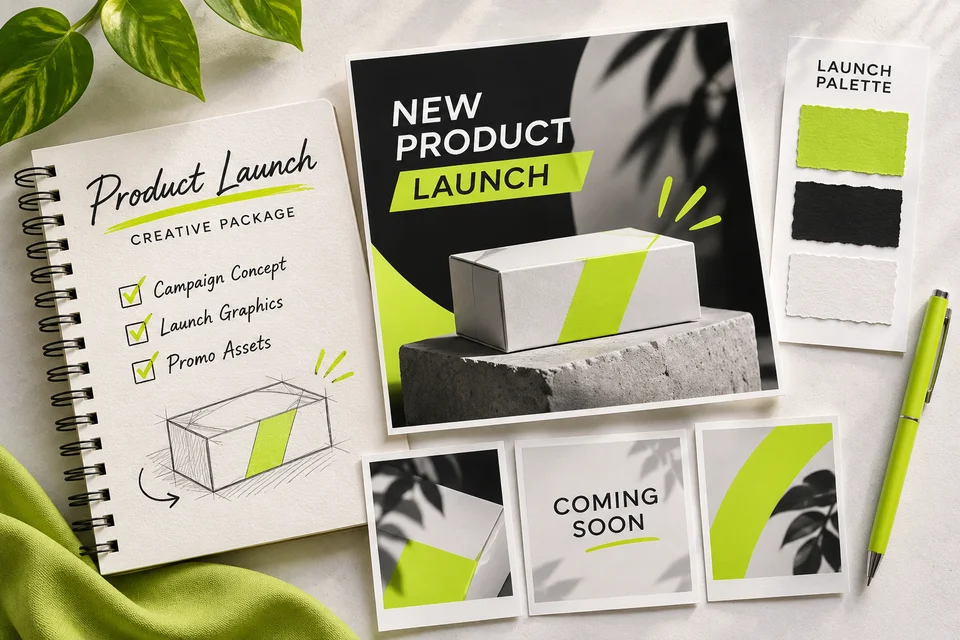
Offer a defined set of product images and captions for a small launch. Specify the channels, formats, number of posts and whether your deliverable is copy, image files, saved drafts or an approved scheduling service. Those are different levels of responsibility.
Draft a three-post sequence with a different purpose for each post, plus the product facts each caption depends on.
How to prepare this idea
Use the actual product details, create supporting visuals in Studio and prepare content in Social → Compose or Campaigns. A sequence might introduce the product, show a useful detail and explain what the buyer receives. Avoid adding unverified claims just to make the caption more dramatic.
Client approval, account access and publishing authority need an explicit arrangement outside the creative brief. Scheduling requires the relevant connected account. Do not describe admin-preview carousel functionality as a general service feature.
Turn a client’s process into useful pages
A custom printable-design service
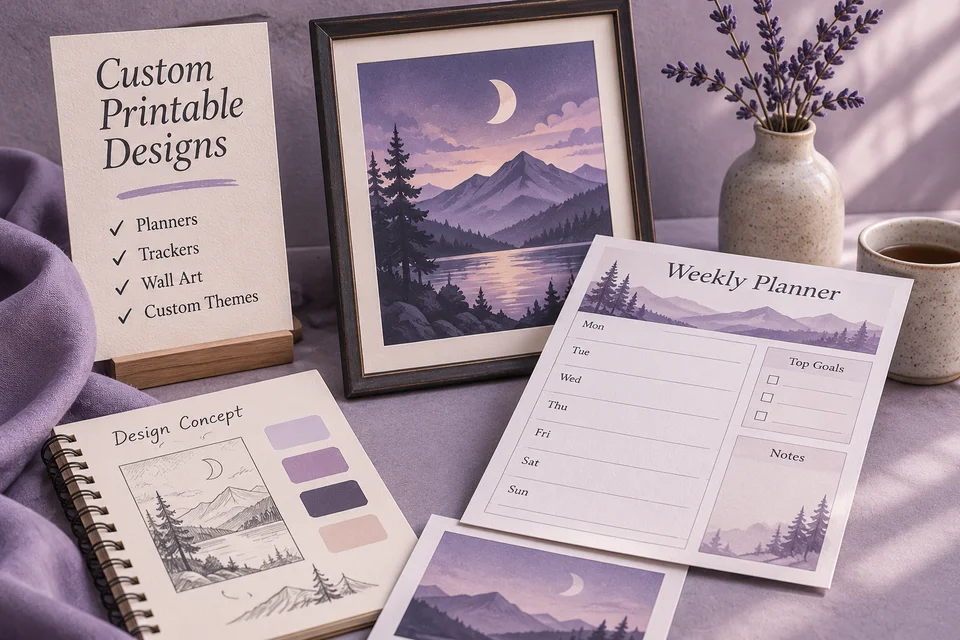
A client may need a workshop worksheet, a guest information book or a planning pack. Start with their actual process and content. A five-page custom PDF with editing and layout review is a clearer offer than an unlimited promise to make “templates.”
Ask for a real document or process the client wants to improve, then outline the page roles before quoting the layout.
How to prepare this idea
Confirm the reader, page size, content responsibility and print-and-write format. Build a page plan, create editable Studio artboards and export the reviewed PDF. Have the client proof the factual content; you inspect the layout and final file.
This workflow does not automatically deliver fillable forms, working spreadsheets or editable templates to the client’s customers. Define whether your client receives only the final PDF or any separately verified source material.
Make recurring work predictable
Ongoing design support for a small brand

A retainer can suit a brand with repeated, reasonably similar creative requests. Define the work you accept, a capacity limit, a request queue and review windows. “Unlimited design” is difficult to deliver responsibly when requests vary from a caption change to an entire collection.
List the recurring requests from one type of client and define a small monthly capacity in concrete deliverables or work time.
How to prepare this idea
Keep the brand context, approved designs and collections organized in oddPOD. Reuse editable elements and calibrated mockup sets where appropriate, while keeping a record of which version was delivered. Your work log, billing and client communications live in the agreed external process.
Review actual request volume before renewing the arrangement. New product lines or major rebranding should trigger a scope discussion rather than quietly displacing the planned work.
Refresh a known assortment
A seasonal visual refresh
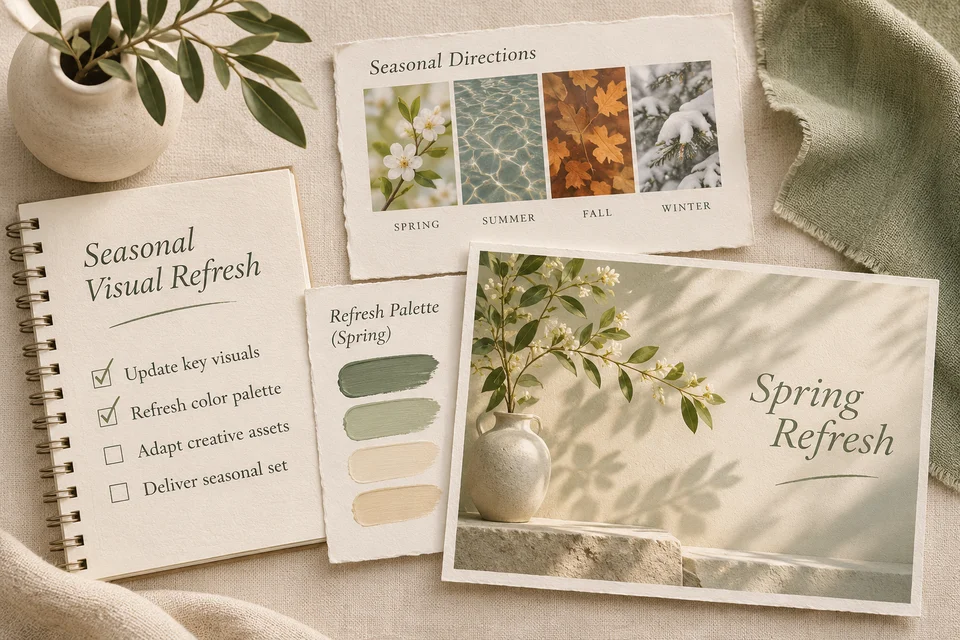
An established seller may want seasonal listing images or coordinated promotional artwork without changing the underlying products. Agree on the exact products, assets and fields to update. Confirm whether the job includes new product designs or only their presentation.
Make a before-and-after asset list for three existing products and mark exactly which changes require client approval.
How to prepare this idea
Review the current files, retain the approved brand elements and develop a focused seasonal direction in Studio. Re-render agreed garment views and prepare replacement copy where needed. Preserve a record of the previous version so the client can identify what changed.
The client confirms product availability, dates and delivery statements. Uploading replacements and retiring old promotional material are separate handoff tasks. A seasonal theme should not imply a time-limited offer unless the client has actually approved one.
Adapt language and layout together
Human-reviewed catalog adaptation
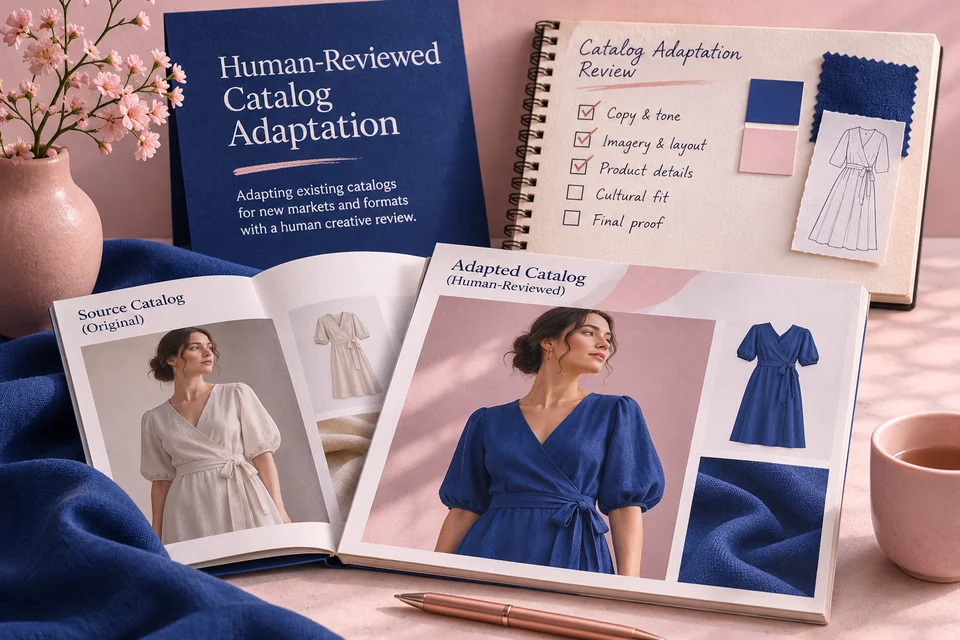
A brand entering another language market may need localized artwork, product text and images. Offer a bounded adaptation project with a qualified language reviewer. Do not treat machine translation or a font substitution as a complete localization service.
Adapt one product with a fluent reviewer and inspect the entire listing-image and wording set before proposing the full catalog.
How to prepare this idea
Collect the approved source, terminology and destination requirements. In Studio, adjust typography, line breaks and composition for the reviewed wording. Check the actual script, font and exported appearance before accepting a broader assignment. Keep versions clearly identified.
Product compliance, market-specific policies and storefront configuration require the client’s own checks. Your creative service should state who approves translations and who verifies those external requirements.
Help a client choose a direction
A product-concept development package
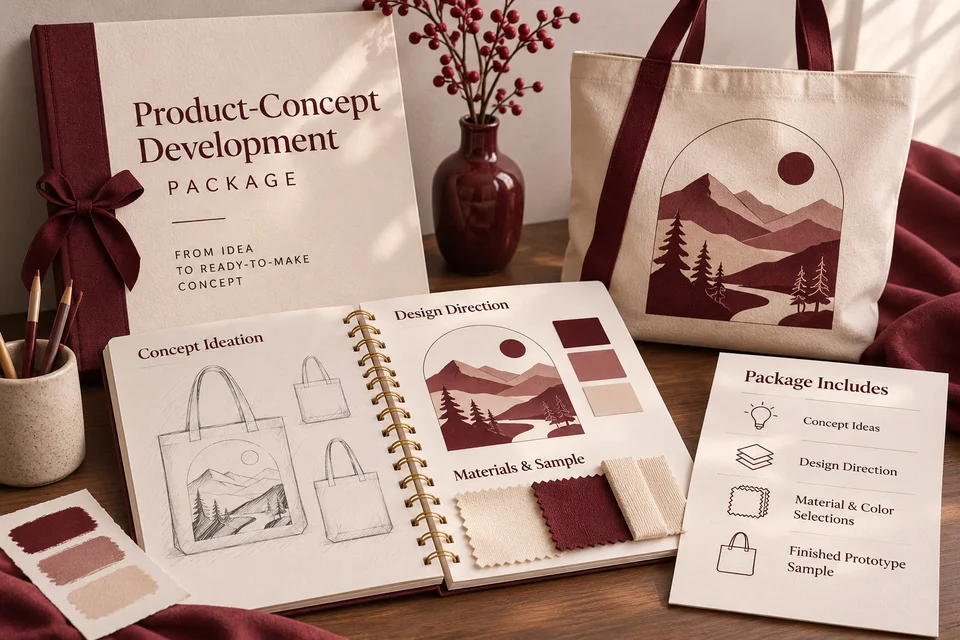
Some clients need a decision before they need production files. Offer a short exploration with a buyer brief, a small number of distinct directions and a comparison of the work each direction requires. The deliverable is a useful decision package, not a guaranteed winning product.
Define one buyer question and create two meaningfully different concepts that could answer it.
How to prepare this idea
Record the audience, constraints and visual direction in oddPOD. Build rough compositions or illustrations in Studio and label them as concepts. Compare the options using the client’s criteria, such as brand fit, required original assets or production complexity.
Audience research and actual buying behavior remain outside a concept board. Agree on how the client will gather feedback and what counts as approval to begin production work. A selected direction can become a separately scoped design project.
Corner Shelf Books: a defined merchandise project
This fictional bookstore brief shows how to package a service without hiding the work. The scope board and artwork are original editorial concepts, not a signed client agreement, approved customer project or real-photo mockup.
A clear handoff.
- Directions
- 02
- Final artwork
- 01
- Garment views
- 03
- Ask for the inputs
The bookstore wants one reader-themed tee for customers. Ask for its approved brand files, customer context, preferred garment, intended sales route and one approver. Record missing facts before design work begins. Do not invent a garment’s fabric or a launch deadline.
- Write a bounded offer
For this example, the creative scope is two rough directions, one selected final artwork, one consolidated revision round and three garment-view images. Include one draft title and description using supplied product facts. Additional design directions, a new garment or extra revisions require a separate scope decision.
- Present an actual choice
Explore a book-stack illustration and a typography-led reading phrase. Compare the two against the client’s audience and brand. Label these as directions, collect consolidated feedback and record the chosen composition before refining the final artwork.
- Produce and review the assets
Create the approved artwork in Studio and prepare the agreed mockup set using appropriate garment photographs. Review placement and image consistency. Have the client confirm the words and product facts. A visual approval does not replace a physical sample or provider review.
- Handoff without ambiguity
Deliver the agreed final files and a manifest identifying artwork, listing images and copy. State which version is final and what remains for the client: sample review, storefront setup, publication and order management. If provider-draft preparation is added, review the destination and action explicitly.
The delivery plan
What the finished work should include.
- One written creative brief with inputs, exclusions and a named approver.
- Two rough directions and a recorded choice of one direction.
- One final artwork and the agreed revision outcome.
- Three reviewed garment-view images plus draft listing copy based on verified facts.
- A file manifest and a clear list of client-owned next steps.
A useful follow-on is a seasonal edition with a fresh scope. Reusing the approved brand system may reduce preparation work, but it does not remove the need to agree on deliverables and review.
Make the boundaries visible before you start.
Good service packaging makes the client’s decision easier and your delivery more predictable. Record what you need, what you will deliver and who approves it. This guide is a practical creative-scope example; use a suitable separate agreement for your actual engagement.
Account for briefing, design, production, review, revisions, software, optional AI, communication and handoff when estimating the work. A small image edit and a new art direction should not disappear into the same undefined allowance.
- Name the exact number of products, concepts, views, formats and revision rounds.
- Identify client-supplied inputs and the person who approves factual content.
- Decide who retains editable masters and what final files the client receives.
- Separate creative delivery from storefront access, publication and fulfillment work.
- Track approvals and delivered versions in the agreed client process.
- Treat a new language, new product format or new design direction as a scope decision.
Your questions, answered.
Do I need to sell my own products to offer these services?
No. You can deliver defined creative work for clients who operate their own shops. Build a representative sample package and explain what it includes. Your ability to use the tools is part of delivery, but the client is buying a specific outcome.
Can clients review work inside my oddPOD workspace?
This guide does not assume a client portal or shared approval workflow. Present the agreed previews and files through your existing client process, collect approval there and keep your working records organized.
Should publication be included in a design package?
Only when the scope, permissions and destination are explicitly agreed. A file handoff, a provider draft and a published storefront listing are different deliverables. You can keep publication with the client while providing clear preparation instructions.
Can I use AI for client work?
AI can assist with ideas, images or writing, and uses paid credits in oddPOD, including Ask Oddly. Follow the client’s agreed requirements, review the output and verify product facts. Do not promise that generated work is automatically suitable for commercial use or production.
What makes a retainer different from a one-off project?
A retainer reserves a defined amount or type of recurring work over an agreed period. Specify request limits, turnaround, revisions and how larger requests are handled. Use actual delivery experience to refine the arrangement rather than assuming every month will be identical.