You can build a print-on-demand apparel business around a shared interest, a seasonal ritual, a special occasion or an organization that needs merchandise. The useful starting point is a specific buyer and a concrete offer, not a large catalog.
This guide compares ten directions and walks through a fictional birdwatching collection. Some ideas suit an independent shop selling individual garments. Others suit a designer charging a client for a defined project. Choose the model before you choose the artwork.
Use oddPOD to organize your audience and collection, design editable artwork, prepare mockups and listing details, and create a Printify draft. Your storefront, customer acquisition, production and shipping remain separate.
Compare the business ideas.
Match the opportunity to the people you can reach and the inputs you already have. These are possible offers to test, not a ranking of demand or expected profit.
On a small screen, scroll the table sideways. Each idea links to its full walkthrough.
| Idea & example | Who buys | Selling model | Start with |
|---|---|---|---|
| 01A micro-niche apparel brandBirdwatching tees | People who share a specific interest | Individual retail sales | Firsthand audience knowledge |
| 02A coherent seasonal collectionAutumn walking-club apparel | Shoppers with a seasonal ritual | A timed retail collection | A calendar and shared visual direction |
| 03Apparel for celebrations and milestonesA family-reunion shirt series | An event organizer or gift buyer | Retail or a scoped group order | Confirmed wording and event date |
| 04Merchandise for clubs and community groupsA neighborhood cycling-club tee | A club coordinator and its members | An agreed client project or member sales | One approver and approved club assets |
| 05Merchandise for independent businessesA bookstore’s original reader tee | A café, bookstore or neighborhood shop | A design fee and agreed product arrangement | The business’s brand and customer context |
| 06Original artwork for a fundraising campaignA community-garden supporter tee | An organization running a defined campaign | An agreed design fee or campaign arrangement | Approved campaign language and contribution terms |
| 07Original local-tourism souvenirsAn illustrated coastal-walk tee | Visitors and people attached to a place | Direct retail or a local client arrangement | Original place-specific artwork |
| 08Human-reviewed multilingual collectionsA bilingual everyday-expression tee | People who identify with a language community | Retail sales or commissioned editions | A fluent reviewer and suitable fonts |
| 09Heritage-inspired original collectionsAn original family-food tradition illustration | People connected to a shared cultural experience | A creator-led retail collection | Personal knowledge and thoughtful review |
| 10Employee merchandise for business clientsAn employee welcome apparel collection | A people, operations or team lead | A scoped business-to-business project | Brand approval and an ordering owner |
Ten ways to build something of your own.
Use the first step in each idea to test the brief before you commit to a full collection.
Individual retail sales
A micro-niche apparel brand
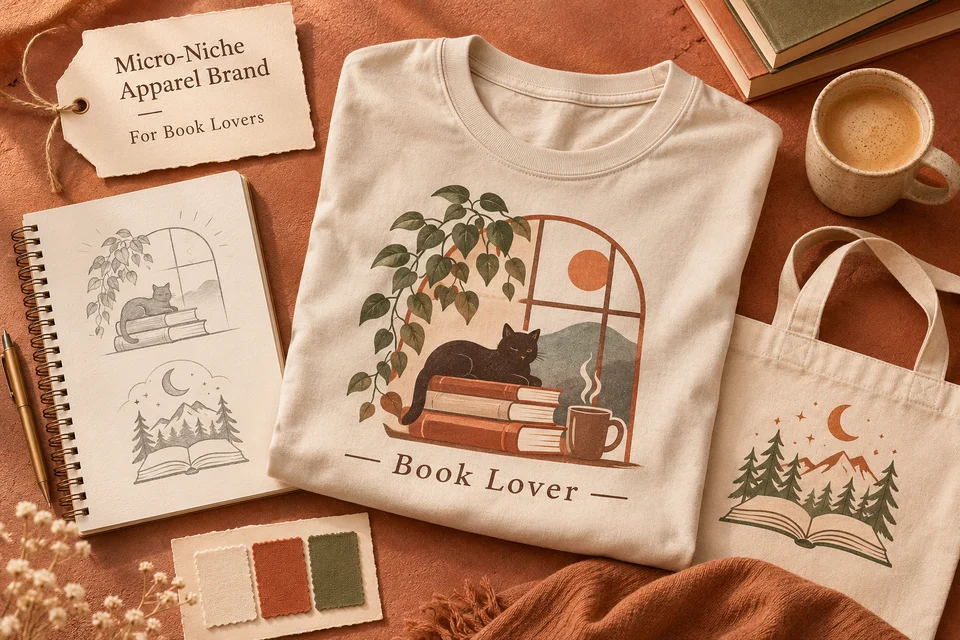
Build for a group whose language you understand. A weekend birder may connect with the ritual of waiting for one last sighting more than a generic outdoor slogan. The offer is a small collection that makes that shared experience visible, sold directly to individual shoppers.
What you’ll need & how to prepare it
- What you’ll need
- Write down the audience’s habits, phrases and visual references. Bring original drawings or photographs you can use, plus a short palette and typography direction. Choose a specific garment and print placement before polishing the art.
- Build it with oddPOD
- Save the audience in Niche & brand, create a collection, and build related text and vector compositions in Design Studio. Keep the phrase, bird and supporting marks editable. Prepare mockups and listing details for the first product before extending the range.
- Handle outside oddPOD
- Find a way to reach the community, test whether the idea resonates, choose a storefront and inspect a physical sample. oddPOD organizes the creative work; it does not supply customers.
Show two rough concepts to people who actually birdwatch. Ask which they would wear and what feels unfamiliar or forced.
Then grow it: Carry the same bird motif into a second phrase and a cooler-weather apparel design, after reviewing the first sample.
A timed retail collection
A coherent seasonal collection
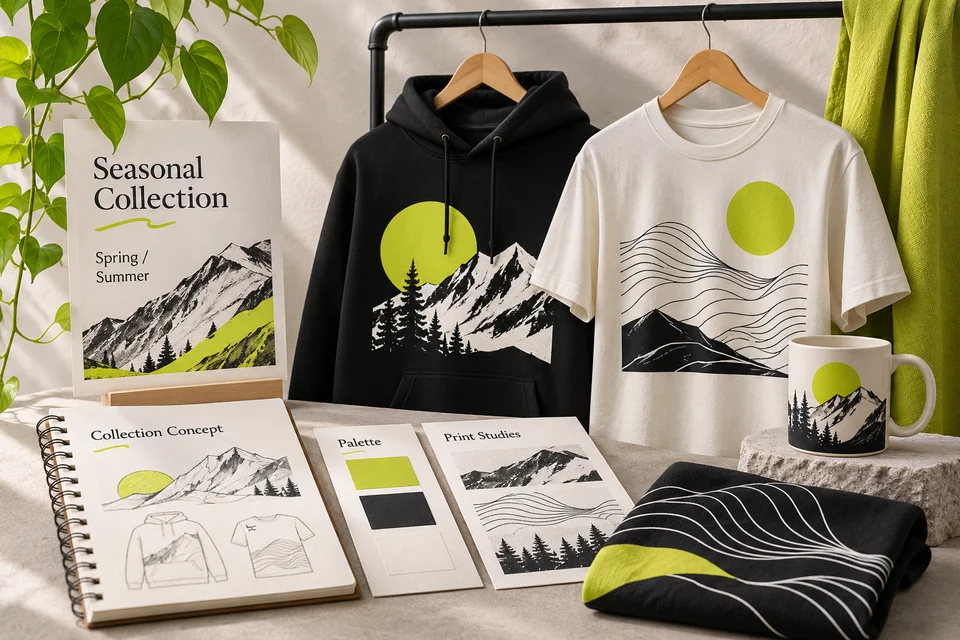
A seasonal range gives a familiar audience a fresh reason to return. Think of three related autumn walking designs, with common lettering and a leaf motif. The collection’s value comes from a recognizable point of view, rather than a pile of unrelated holiday graphics.
What you’ll need & how to prepare it
- What you’ll need
- Choose the audience, season, garment options and intended selling window. Map backward from when buyers need the item, allowing for design review, samples, production and delivery. Decide which details change and which remain consistent.
- Build it with oddPOD
- Group the products in one collection. Reuse editable design elements across Studio artboards, review the contrast of each palette, and prepare a consistent mockup set. Keep each product’s copy and artwork linked to its own record.
- Handle outside oddPOD
- Check current provider turnaround and shipping estimates, decide when to stop promoting time-sensitive items, and update your shop. A scheduled social post does not reserve stock or guarantee arrival.
Make a three-product collection sheet: one audience, three phrases, two garment colors and a realistic launch window.
Then grow it: Retain the most recognizable motif for a different season, changing the story and artwork rather than only the date.
Retail or a scoped group order
Apparel for celebrations and milestones
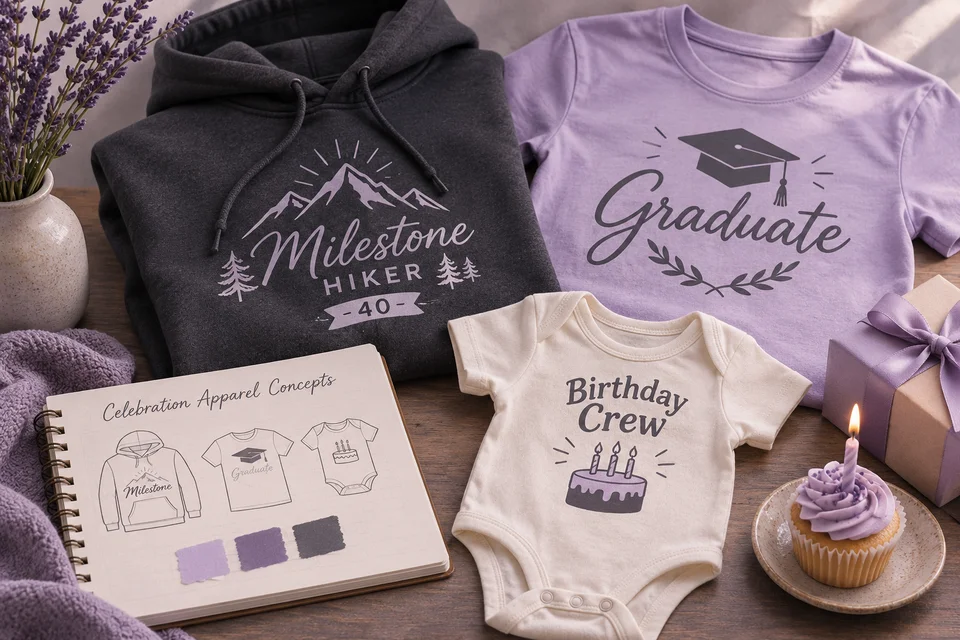
A reunion, retirement or anniversary gives apparel a clear purpose and deadline. Offer a coordinated design with a defined set of text variations, such as one reunion graphic with different family names. A named organizer is easier to serve than an open-ended promise to customize anything.
What you’ll need & how to prepare it
- What you’ll need
- Get the approved wording, spelling, date, size requirements and design brief. Decide how many variations and revision rounds are included. Use a written proof so everyone approves the same version.
- Build it with oddPOD
- Duplicate artboards and edit names or dates manually in Studio. Keep the common design grouped, inspect every variation, and prepare separate product artwork and mockups where needed. Personalization here is your design service, not an automatic buyer-facing configurator.
- Handle outside oddPOD
- Collect orders and approvals, coordinate payment, and confirm delivery expectations with the provider. Agree on a cutoff for changes; an event date makes late corrections particularly costly.
Write a one-page offer defining the base design, allowed text changes, proof process and delivery responsibilities.
Then grow it: Offer a second related apparel layout for organizers or a repeat design for the next gathering.
An agreed client project or member sales
Merchandise for clubs and community groups
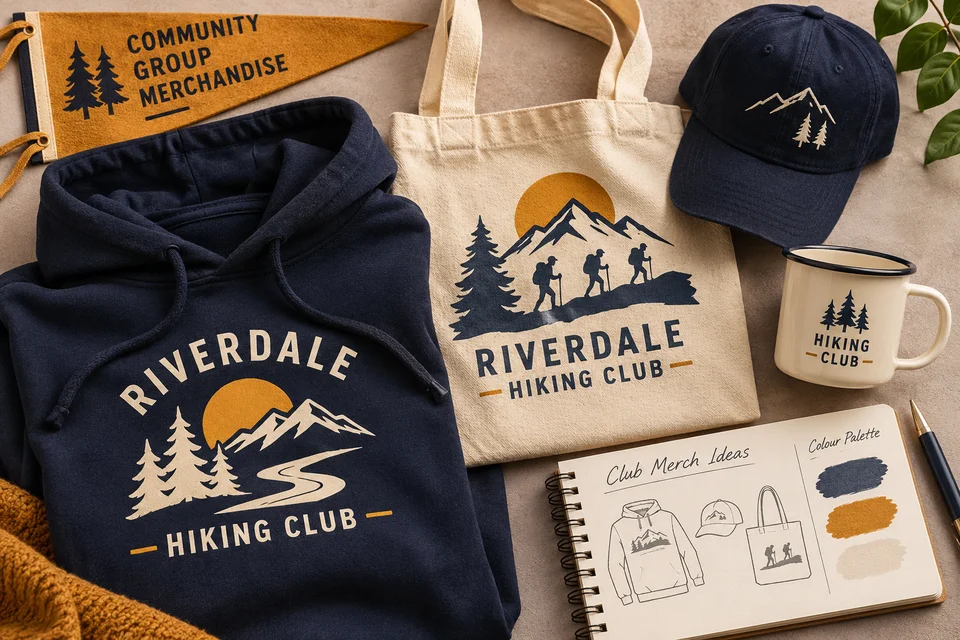
A club already has a shared identity. Your job is to express it in apparel members will use beyond one meeting. The buyer may be the coordinator paying for design work, while individual members buy garments through an agreed store. Establish that distinction before quoting.
What you’ll need & how to prepare it
- What you’ll need
- Gather the club’s approved name and artwork, preferred colors, intended use and a single decision-maker. Ask whether members want a small club mark, a large illustration or a design tied to a specific event.
- Build it with oddPOD
- Record the brief, build a small set of compositions in Studio, and use mockups to explain placement and scale. After approval, prepare the chosen design and provider draft with the agreed variants.
- Handle outside oddPOD
- The club and seller agree who operates the shop, receives payments, answers member questions and funds samples. Collect size choices through the agreed ordering process; oddPOD is not a group-order checkout.
Ask a coordinator to describe the last merchandise order: what members liked, what caused delays and who signed it off.
Then grow it: Add an annual ride or membership edition using the same approved visual system.
A design fee and agreed product arrangement
Merchandise for independent businesses
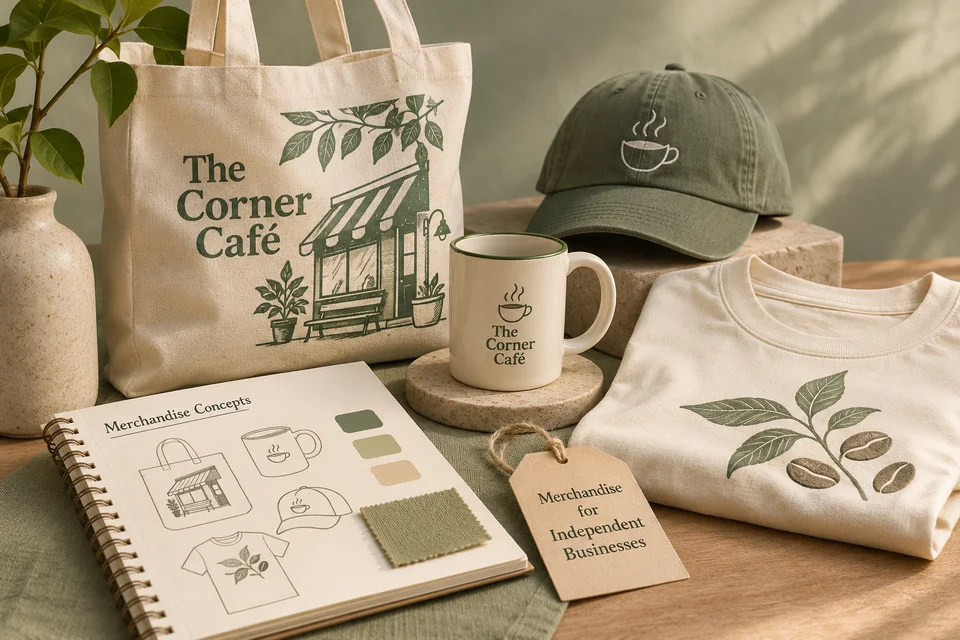
A neighborhood business can become part of someone’s identity. Offer merchandise that customers would choose to wear: an original reading illustration for a bookstore, for example, with a subtle shop signature. This differs from staff clothing because the end buyer is a customer supporting the place.
What you’ll need & how to prepare it
- What you’ll need
- Request the brand files, intended customer, preferred garment and retail context. Discuss whether the owner wants stock in the shop, an online offer or both. A print-on-demand workflow does not automatically replenish a physical shelf.
- Build it with oddPOD
- Create a client-specific collection, explore editable artwork and present approved concepts as mockups. Prepare listing copy using confirmed business details, then create the selected apparel draft.
- Handle outside oddPOD
- Agree on your design fee, the business’s role in sales and the handling of inventory or customer orders. The business should approve its branding and any claims before they appear on garments or listings.
Prepare a small, original concept for one kind of local business and a clear description of your deliverables. Use it to discuss a brief with an owner.
Then grow it: Offer a coordinated anniversary or neighborhood-event edition with a separate scope and approval.
An agreed design fee or campaign arrangement
Original artwork for a fundraising campaign
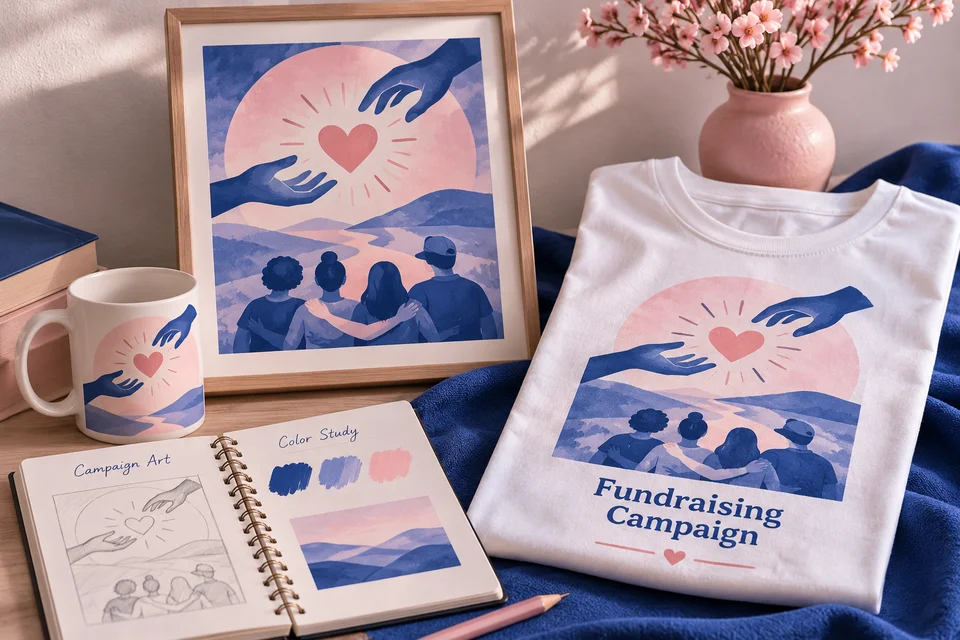
A fundraiser needs a design people want to wear and a clear account of what the purchase supports. You could create apparel for a community garden’s new growing space. Define your creative fee separately from whatever contribution the organizer commits to making.
What you’ll need & how to prepare it
- What you’ll need
- Get the campaign brief, permission to use the organization’s identity, the approved message and the organizer’s exact contribution wording. Keep the design focused on the campaign rather than making broad claims about impact.
- Build it with oddPOD
- Build original artwork and supporting type in Studio. Use a shared collection to keep the garment design, listing details and promotional assets consistent. Review the wording on every output before preparing a provider draft.
- Handle outside oddPOD
- The organizer must manage the campaign, payment handling, contribution records and any applicable requirements. oddPOD does not collect donations or automatically distribute a portion of sales.
Ask the organizer to approve one short statement explaining what a purchase contributes, who handles it and the campaign period.
Then grow it: Create a related volunteer or event-day design if the organization has a distinct need for it.
Direct retail or a local client arrangement
Original local-tourism souvenirs
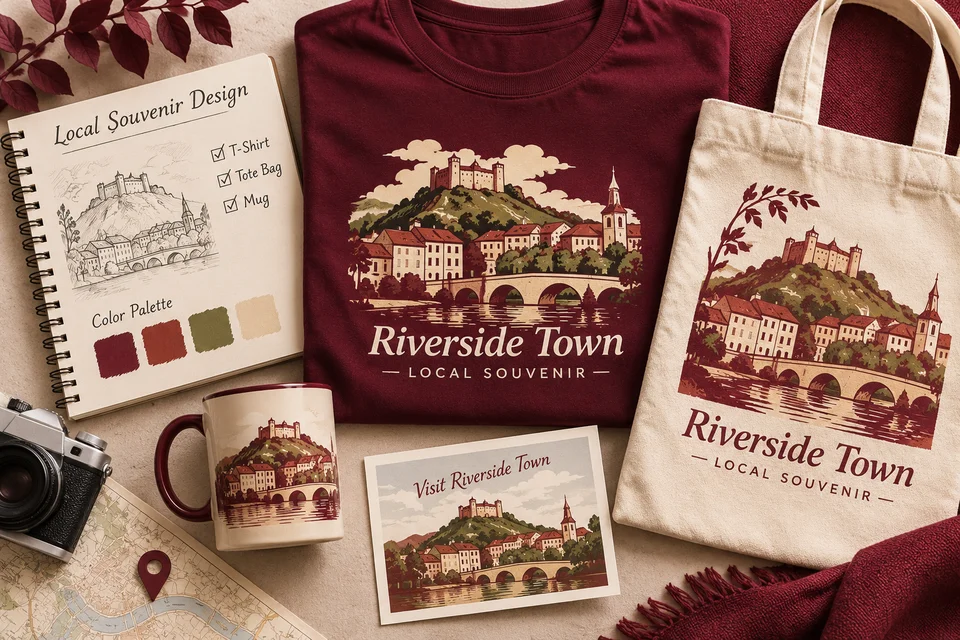
A souvenir can capture a small detail that broad travel graphics miss: a coastal path, a local bird or a familiar street scene. Design for someone remembering a visit or showing affection for home. The place is the subject; an existing tourism logo does not have to be the design.
What you’ll need & how to prepare it
- What you’ll need
- Start with your own sketches or properly usable reference material, verified place names and a clearly chosen buyer. Decide whether the visual should communicate a specific location immediately or reward someone who knows it.
- Build it with oddPOD
- Combine original imagery and editable lettering in Studio, create related compositions, and compare how they read on your chosen garment colors. Prepare mockups and a listing story that describes the actual artwork and location.
- Handle outside oddPOD
- Check the suitability of the imagery and names for commercial use, choose a sales route and discuss terms with any local retail partner. A retailer may need stock rather than individual shipped orders.
Sketch three details someone would recognize from one place, then ask a local and a recent visitor which one feels most distinctive.
Then grow it: Build a neighboring-location series with a consistent border, lettering treatment and original scene for each place.
Retail sales or commissioned editions
Human-reviewed multilingual collections
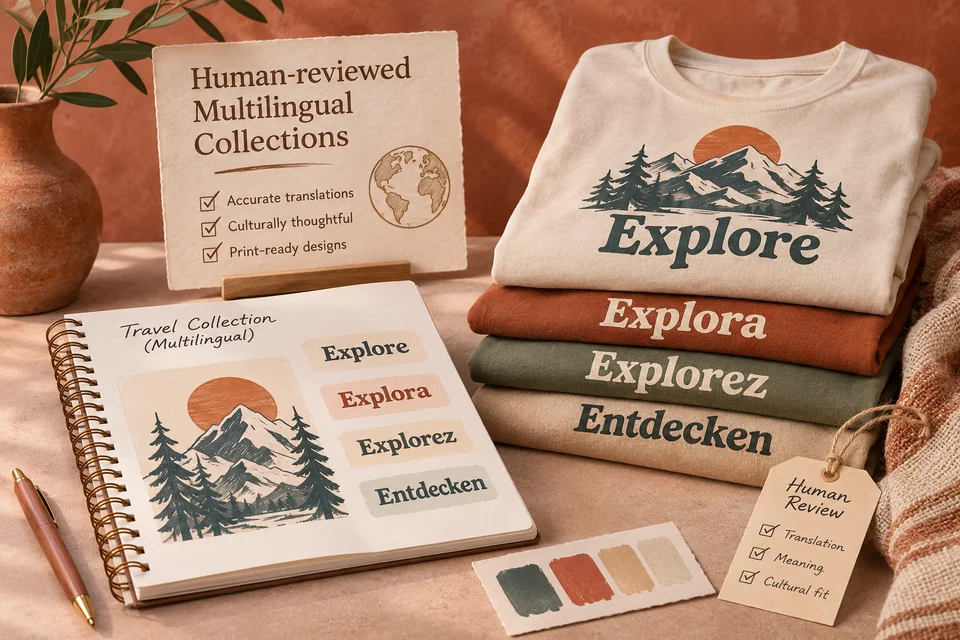
Language can carry a sense of belonging that a literal translation misses. A collection might pair an everyday phrase with a small original illustration, adapted for different language communities. Each version needs its own editorial and visual review, not just a swapped text field.
What you’ll need & how to prepare it
- What you’ll need
- Work with a fluent speaker on meaning, tone, spelling and context. Choose fonts with the required characters and check the complete layout. Longer wording, accents and script behavior can change the design substantially.
- Build it with oddPOD
- Keep each language version on a separate Studio artboard. Adjust line breaks and type size manually, and inspect the final rendered artwork with the reviewer. Test your specific script and font before committing to a collection; this guide does not establish support for every writing system.
- Handle outside oddPOD
- Arrange language review, verify the exported appearance, and provide accurate listing copy for the intended buyers. Machine-generated wording is a draft until someone qualified has checked it.
Choose one phrase in one language pair and have a fluent reviewer approve both the wording and a full-size layout.
Then grow it: Add another expression with the same reviewer before adding more languages.
A creator-led retail collection
Heritage-inspired original collections
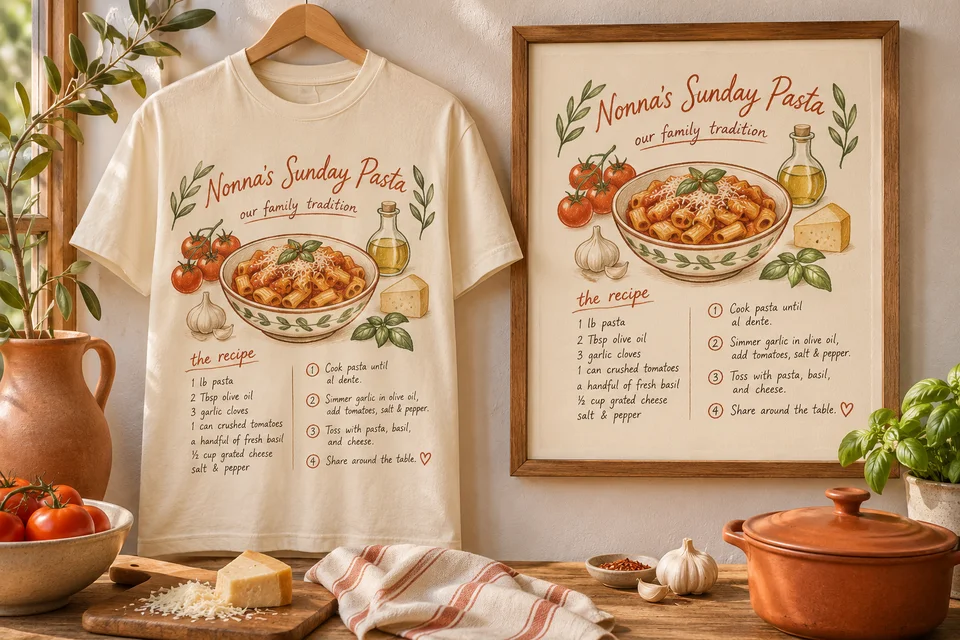
A creator can draw on lived experience to tell a specific story: a family cooking ritual, a familiar saying or a memory of a place. Original work and context give the collection its character. Avoid treating a broad culture as a set of interchangeable decorative symbols.
What you’ll need & how to prepare it
- What you’ll need
- Choose a story you can explain in your own words. Gather your original drawings and notes, and seek appropriate input from people connected to the subject. Decide what belongs in a public product and what should remain private or outside the collection.
- Build it with oddPOD
- Use Studio to combine illustration, editable typography and a consistent palette. Keep the story attached to the collection and prepare listing text that describes your actual connection without implying endorsement by a whole community.
- Handle outside oddPOD
- Review names, imagery, attribution and any permissions needed for your chosen material. Community feedback and commercial-use decisions remain human responsibilities.
Write a short account of the particular memory or tradition behind the work, then sketch one original motif that carries that story.
Then grow it: Develop a second piece about another detail of the same story, preserving the collection’s point of view.
A scoped business-to-business project
Employee merchandise for business clients
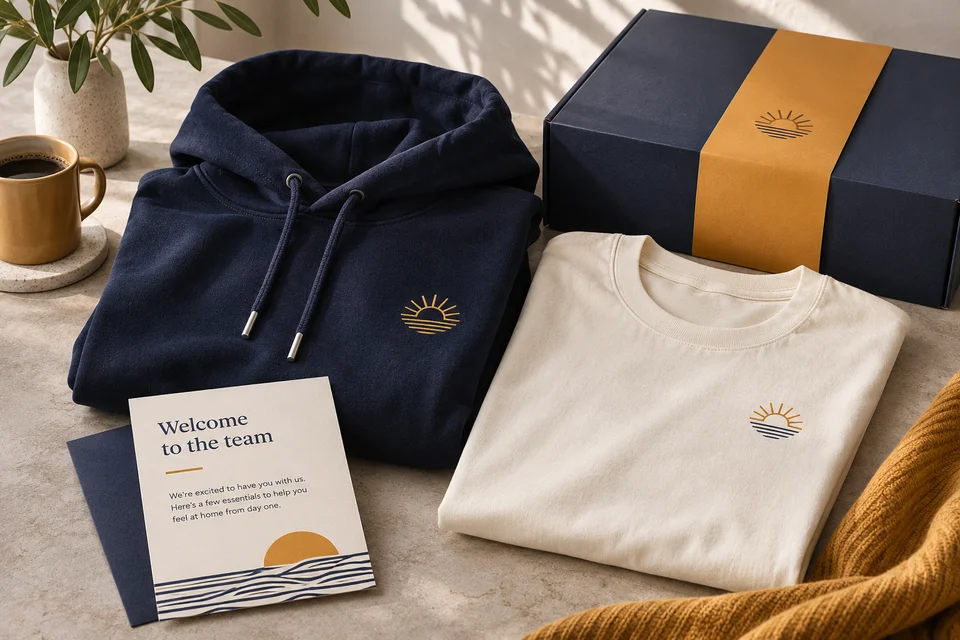
Employee merchandise serves an internal audience. A welcome collection could pair a small company mark with an original team illustration, giving new hires a choice of understated or expressive apparel. The buyer usually needs a dependable approval and ordering process as much as a design.
What you’ll need & how to prepare it
- What you’ll need
- Collect the approved brand assets, garment preferences, sizes needed, timeline and named approver. Set expectations for design revisions, file delivery and whether the client or your business will manage garment orders.
- Build it with oddPOD
- Create the client’s collection, prepare editable designs and show placement options in mockups. After signoff, prepare the product files and relevant provider drafts. Reusable design components make later updates easier to scope.
- Handle outside oddPOD
- The client handles or assigns payment, employee size collection, addresses, ordering and customer support. Do not collect employee information in an artwork brief when the ordering service can handle it directly.
Define a small welcome-apparel package with a fixed number of concepts, one approver and a clear handoff checklist.
Then grow it: Offer a new team or milestone edition as a separate project using the approved brand system.
Meet Field Notes Club.
A fictional apparel collection for people who always have time for one more bird.
This is an original editorial concept showing the decisions behind a small range. The illustrations below are not app screenshots, physical samples or verified exports. The example name and phrases have not been commercially cleared.
Weekend birdwatchers.
Everyday observers.
People who enjoy early walks, field notebooks and the satisfaction of noticing something small. The voice is observant, dryly funny and welcoming to beginners.
Three related graphics.
One considered range.
Start by sampling one tee, then develop two companion designs. Use natural and forest garment colors as a concept direction; confirm actual provider colors and availability before listing.
A palette with a point of view.
Forest ink, warm paper, moss and a small rust accent. Keep contrast strong and limit the number of colors competing within each design.
#2340c9Paper
#f6f1e4Moss
#f2c14eRust
#e5482f
the little
things.
Bold sans-serif headlines. Small, widely spaced field-label details. Check font permissions and legibility at the final print size.
Three designs. One recognizable family.
Stacked lettering and a perched bird capture the reluctance to end a good walk.
A circular composition and bird in flight give the early-morning group its own emblem.
A winding path and distant birds connect the collection to the pleasure of observing.
the long
way home.
Take the concept into oddPOD.
- Save the brief and create the collection.
In Niche & brand, record the audience, voice and palette. Create a Field Notes Club collection and a product record for the lead tee. Keep notes on what still needs checking, including the artwork, garment and selling route.
- Build the editable artwork.
In Design Studio, place the original bird illustration, headline and small label text on separate layers. Group related elements and keep an editable project. Use a new artboard for each companion design so the common typography and spacing are easy to compare. Manual editing does not need AI.
- Prepare the first garment and images.
Choose the actual provider garment and print area before preparing the production file. Inspect the design on light and dark variants. Use oddPOD’s calibrated garment-photo mockups and an appropriate reusable set for listing images. Check placement, masks and fabric blending; the flat concept illustrations on this page do not demonstrate that rendering.
- Write the listing around verified details.
A draft title could be “Just One More Bird: Birdwatching Graphic Tee.” Describe the original perched-bird artwork and relaxed humor. Add material, fit, size, care and delivery details only after checking the chosen garment and provider. Keep promotional language separate from unverified product facts.
Before the handoff
Your file, mockup and listing checklist.
- Editable master: save the project and confirm the intended version. Keep the original illustration and text available for corrections.
- Production artwork: inspect dimensions, transparency where required, placement, fine details and text at final size against the chosen print area.
- Variant review: check contrast and placement on each offered garment color. Remove variants you have not reviewed.
- Listing-image set: include a clear front view, a useful artwork detail and accurate size or product information. Confirm every image matches the offered item.
- Listing record: review the title, description, variants, price and production information. Replace every assumed fact with a confirmed one.
- Physical sample: order and inspect the print, fabric and fit before using the sample to make quality claims.
A provider draft is a checkpoint.
After reviewing the product’s artwork, mockups and listing information, use its Launch step to confirm the provider destination and create the draft. Inspect the result in that provider before taking the next action.
In Printify
Review the unpublished product, print placement and selected variants. Check the provider’s current product requirements and then manage publication to your connected selling channel separately.
For the destination-side steps, see Printify’s product creation guide.
Give people a reason to care.
Lead with the experience behind the design. This example caption invites feedback on a concept; it does not suggest an unavailable product is on sale.
“The walk was supposed to be twenty minutes. Then someone heard a bird. Meet Just One More Bird, a Field Notes Club design for people who always take the long way home. Would you wear it in natural or forest?”
Pair the caption with a clearly labeled concept image and listen to the responses. Use Social → Compose to prepare a draft; scheduling or publishing requires the relevant connected account and your choice of action. Once the sample and storefront are ready, revise the caption with the verified product details and actual destination.
Plan the costs before the catalog.
A design you like is the beginning of the business decision. Work out what one order or one client project involves before adding more products.
Creative work
Allow for your design time, samples, software, licensed assets if used, and revision rounds. oddPOD’s workspace and optional paid AI usage are separate from provider charges. AI requests, including Ask Oddly, use credits.
Production & selling
Check the chosen garment, print placements, variant costs, shipping destinations, storefront charges and payment fees. Use current quotes for your actual setup. Account for promotion, support and possible replacements when evaluating the offer.
Client scope
Specify concepts, revisions, final files and approval deadlines. Agree on who pays for samples and garments and who manages orders. Repeated text changes or a new product range are work to scope, not invisible extras.
For a garment sale, compare the amount you retain with the production, shipping and selling costs you pay. Then account for operating expenses and your time. For client work, compare the project fee with the full delivery effort. A positive per-item difference alone is not business profit.
Review a sample, not just a mockup.
Check small text, line weight, ink contrast and placement at the intended print size. Inspect a physical sample for the qualities a screen cannot establish. File requirements vary by product and print area; follow the selected provider specification rather than assuming one export fits every garment. Printify’s file requirements explain where to find those specifications.
Start with a small, reviewed assortment. More colors and sizes create more variants to check, and deadline-based offers need realistic production and delivery planning. Review the final storefront listing and checkout separately from the design and provider draft.
Your questions, answered.
Which print-on-demand idea should I start with?
Start with the audience you can understand and reach. If you belong to a hobby community, test a small niche collection. If you already work with clients, a club or business project may give you a clearer brief and approver. Choose one buyer, one garment and one sample-worthy design before building a large catalog.
How do these ideas make money?
A retail business sells garments and must cover production, selling costs and operating expenses from its receipts. A client service charges for defined creative work, with garment purchasing handled under a separate agreement. Decide which model you are offering; a design fee and a product sale involve different responsibilities. Neither model guarantees sales or profit.
Do I need AI to create an apparel collection?
No. You can bring your own artwork and build with the manual Design Studio tools. AI can assist with ideas, images or writing, but those requests use paid credits, including Ask Oddly. Review generated artwork and wording before preparing a product.
Does oddPOD publish, print and ship the products?
oddPOD prepares the creative work and can create Printify drafts after your review. It does not operate your storefront, print or ship garments. Review publication, ordering and fulfillment in Printify and your store.
Can I offer personalized names or different languages?
You can manually edit text and create separate layouts. Set a clear limit on the variations and proof each one. This is not an automatic customer personalization system. For multilingual work, have a fluent reviewer check meaning and inspect the actual font, script and final artwork before accepting an order.
What should I check before selling the first design?
Review the right to use your artwork and wording, the chosen garment and print-area requirements, legibility, available variants, pricing and delivery information. Order and inspect a physical sample. Check your store’s listing and checkout separately, and decide who will handle questions, returns and replacements.