Creator merchandise starts with an existing relationship: people follow your work and understand its references. Use oddPOD to turn an original or authorized motif into editable apparel artwork, garment presentations and a reviewed provider draft. Start with one product and one recognizable idea, then learn from actual audience interest before expanding the range.
A creator’s advantage is context. You may already know the recurring topic, visual character or shared experience that makes your audience feel involved. The product still needs to stand on its own: a useful garment, a considered design and a clear reason to choose it.
This guide focuses on merchandise for an existing creative identity. If you are starting with an unfamiliar niche, use the print-on-demand business guide first. Here, the important question is which part of your work deserves a physical expression, not how many products can carry your logo.
Choose the relationship behind the product.
You can sell your own merchandise, collaborate with another creator or provide the creative production as a service. Decide which role you are taking before making the artwork.
On a small screen, scroll the table sideways to compare the details.
| Model | Starting asset | First deliverable | Decision to settle |
|---|---|---|---|
| Your own audience | An original identity people recognize | One garment concept | Who wants this specific design? |
| Artist collaboration | Two complementary creative voices | A small approved capsule | Who approves, sells and supports it? |
| Creative service | A creator’s approved artwork and brief | Final design and presentation files | What does your fee include? |
| Authorized adaptation | Artwork with permission for the intended use | A production-specific composition | Which changes and products are approved? |
Six ways to build around an existing creative identity.
These offers differ in who supplies the idea, who owns the audience and who handles the sale. Pick the one that matches your actual role.
For an audience that knows your work
A signature product for your creator community
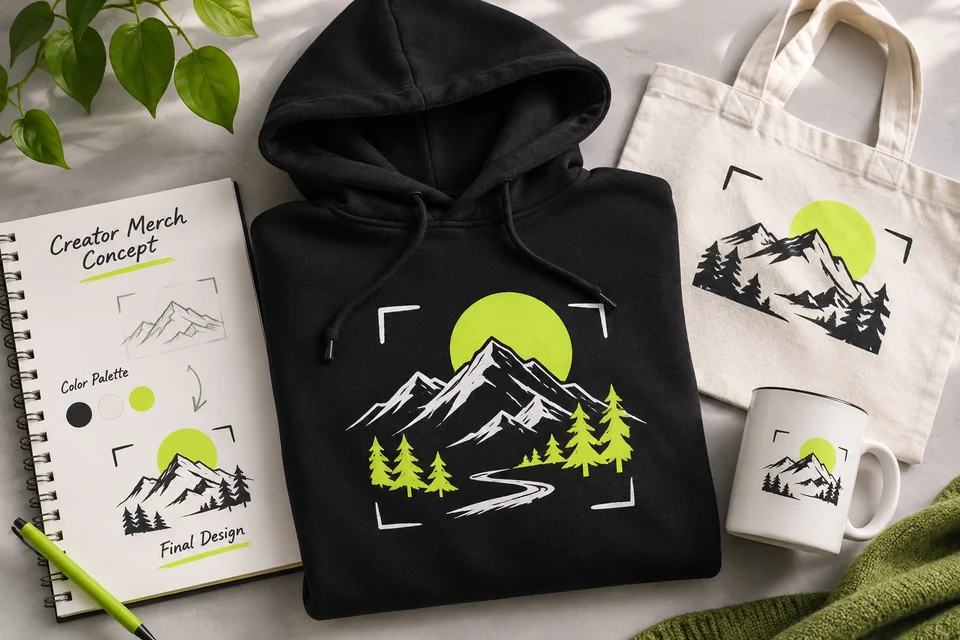
A video creator, illustrator or writer can build a product around a recurring visual or shared experience. For example, an original night-sky sketch from a creator’s observation series could become a single restrained tee. A wearable composition gives people a reason to use it beyond supporting the channel.
Choose one original motif that your audience already associates with you and write the reason it belongs on a garment.
How to prepare this idea
Collect audience comments about that specific motif, then prepare two compositions in Studio. Ask which version people would actually wear and what garment or color they expect. Treat feedback as a design input; likes alone do not establish buying demand.
Keep the first release small enough to inspect properly. Settle the garment, placement, sizes and delivery route before describing the offer publicly. Your existing audience can help you find a direction, but it does not remove the need to review the product.
Turn a shared listening experience into a design
Podcast merchandise with a listener reference
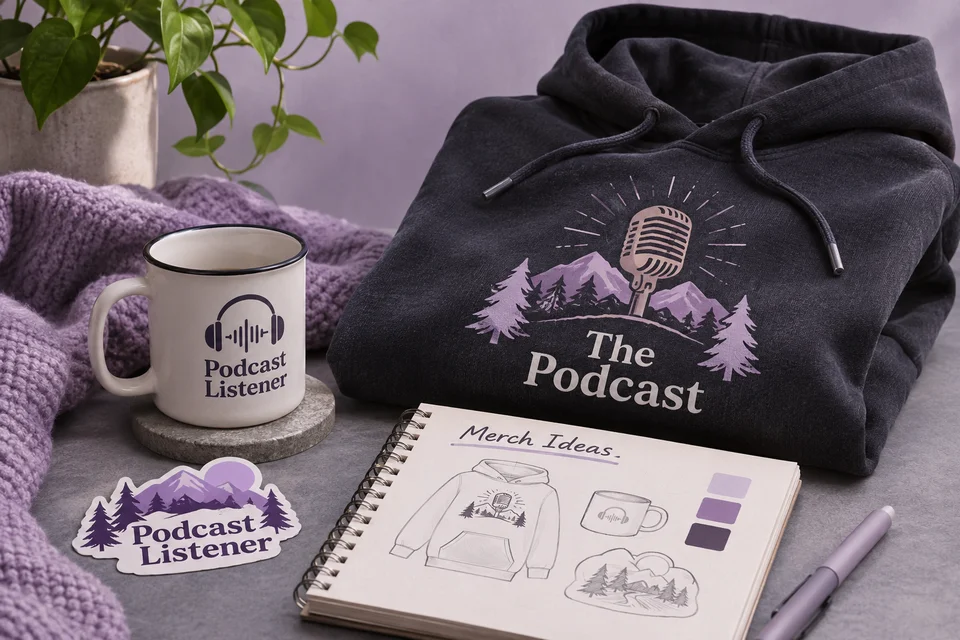
A podcast can use an original emblem, a recurring segment or a show-created phrase as the starting point. A quiet listening-club design might suit the audience better than enlarging the cover artwork. Consider how a listener would explain the shirt to someone who has never heard the show.
List three references created by the show, then ask a small listener group which one they would recognize without the podcast logo.
How to prepare this idea
Build the typography and illustration as editable elements in Studio. Check the phrase at the actual print scale and compare a few garment colors in calibrated mockups. Do not assume guest photographs, quoted material or music artwork are available for merchandise use just because they appeared in an episode.
Prepare a simple product page and show the finished sample in the context of the show. Keep the purchase route, product facts and fulfillment expectations clear. oddPOD supports creative preparation; it does not turn podcast listeners into an automatically connected shop audience.
A visual companion to the music
A musician’s release or live-show collection
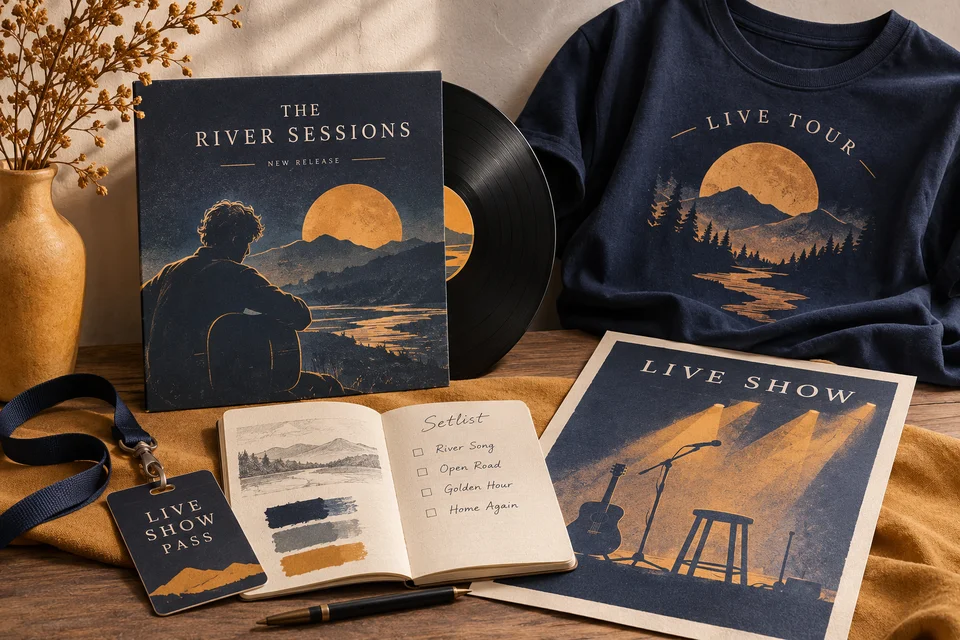
Create a focused apparel design for a musician’s release, recurring performance or visual era. Original cover motifs and approved lettering can provide a coherent starting point. A release collection can be one well-resolved garment rather than a large assortment.
Make a one-page release brief containing the approved artwork, intended garment and the actual sales route: online, at shows or both.
How to prepare this idea
Confirm which artwork, photographs, names and wording the musician can supply for this use. Adapt the composition for the garment in Studio instead of placing a square cover unchanged on every surface. Check small lettering, dark backgrounds and placement with the selected provider’s requirements.
For an event-linked offer, arrange the physical samples and delivery timing outside the design workflow before announcing availability. A product draft is not stock at a venue. Merchandise sales, inventory for live events and customer service need a named owner.
Sell the adaptation and handoff
A merchandise preparation service for artists
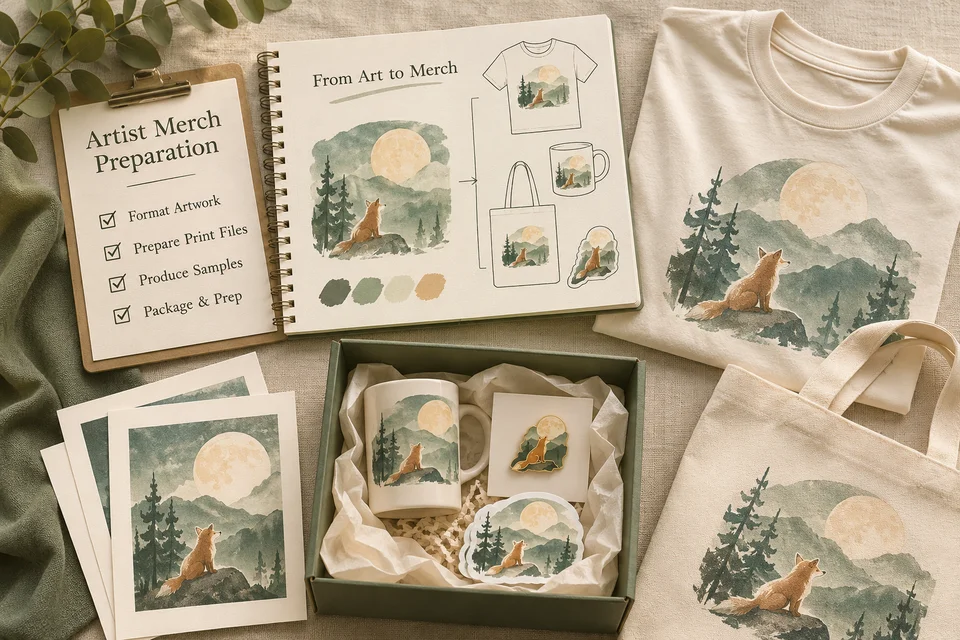
An artist may have a strong body of work and little interest in preparing apparel files. Offer a bounded service: adapt one supplied artwork, prepare a defined set of garment views and deliver the agreed production and listing assets. The client buys a finished package of creative work.
Prepare one authorized before-and-after artwork adaptation and a file manifest that shows exactly what your service delivers.
How to prepare this idea
Review the source image before agreeing to the job. Its detail, resolution and composition may require a new layout or a higher-quality original. Use Studio for the adaptation and Mockups for supported garment presentations. Trace is appropriate only for suitable simpler artwork; it is not a guaranteed conversion of any painting into a clean vector.
Specify who approves changes, which files are handed over and whether provider-draft preparation is included. The artist’s storefront and customer support remain a separate responsibility. Use the creative services guide to turn the package into a clear scope.
Two voices, one coherent collection
A small artist collaboration capsule
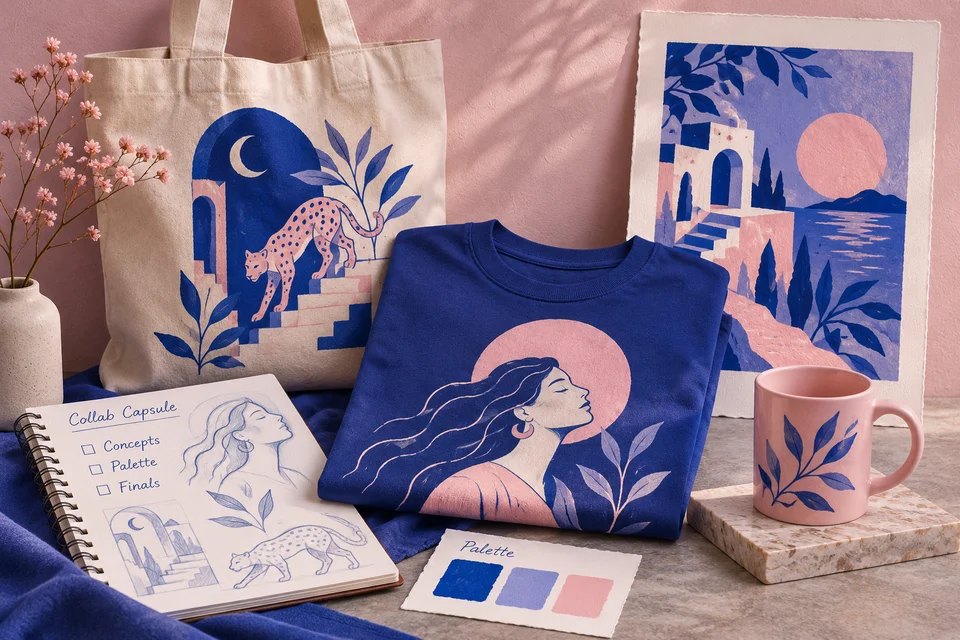
Two creators can develop a collection around a shared subject: an illustrator’s botanical forms with a writer’s original words, for example. The opportunity is a new composition that feels intentional to both audiences. Two unrelated logos on a shirt rarely explain the collaboration by themselves.
Write a joint brief with one shared theme, one approver from each side and a named person responsible for selling and supporting the product.
How to prepare this idea
Agree on the creative roles, approvals, selling account and handling of income before production. Keep a shared external record of those decisions. In oddPOD, organize the agreed direction and build the collection from approved assets, with clearly named versions for review.
Start with one shared artwork and a limited set of product variations you can inspect. If the collection has an end date or quantity limit, make that a real operating decision. A digital mockup does not establish scarcity, availability or production readiness.
Make approved artwork work in a new format
Authorized adaptations of an artist’s work
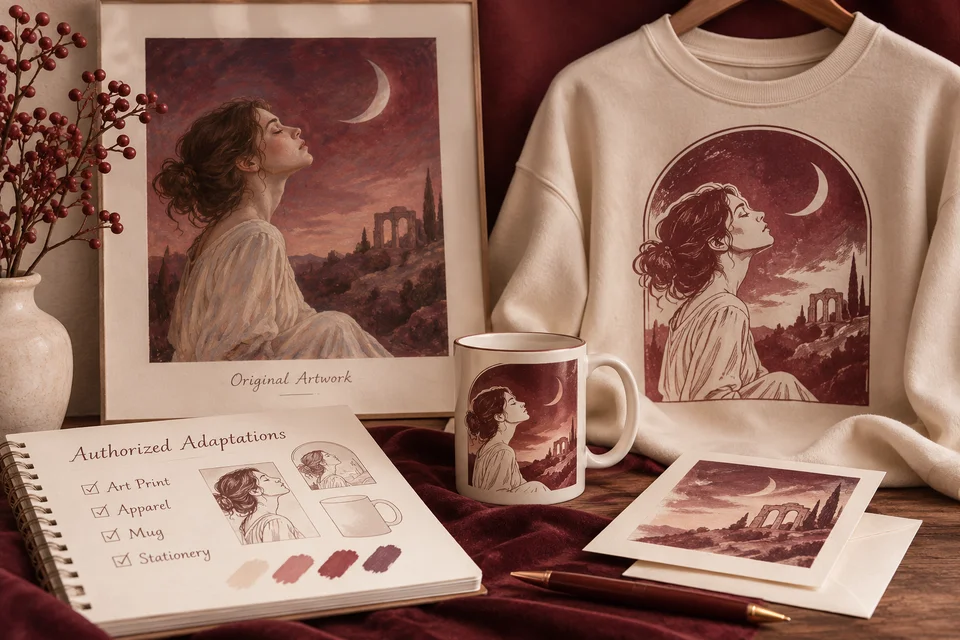
A creator or studio can commission an adaptation of existing artwork for a specific product. This might mean simplifying an authorized illustration for a chest print or rebuilding a composition around a different crop. The creative value lies in preserving the artwork’s character while making it work at the new scale.
Ask for an approved source file and a written description of the specific adaptation before developing the design.
How to prepare this idea
Get the permitted product types, edits, attribution and delivery files agreed in writing through the appropriate arrangement. Keep that record with your project inputs. oddPOD does not grant rights to uploaded artwork or determine whether a particular use is permitted.
Prepare an adaptation proof in Studio and obtain approval before making the production version. Deliver only the agreed files. If the request expands to a new product family or someone else’s artwork, treat it as a new permission and scope decision.
After Hours Audio: one listening-club tee
This fictional podcast collection uses an original sound-wave emblem. The illustration is an editorial concept, not a tested garment, a live store or evidence of listener demand.
next story.LISTENING CLUB
- Write the listener brief
The imagined audience enjoys listening after a long day. The product direction is a quiet, evening-themed tee with the original phrase ‘Stay for the next story.’ Start with that one use and one motif. Ask real listeners about the direction before treating it as a launch plan.
- Build a wearable composition
Create the sound-wave emblem, show name and phrase as separate editable elements in Studio. Try a restrained chest composition and a larger central layout. Choose one based on legibility and audience feedback, then keep the selected master organized with its approved wording.
- Prepare the garment presentation
Select the intended garment and inspect the provider’s print area and file requirements. Use suitable garment photographs in the Mockup editor, calibrate the placement and review the rendered views. The conceptual illustration on this page is not a substitute for that product-specific work.
- Review the provider handoff
In Printify, inspect the unpublished product draft and selected variants, then publish it to your store yourself. Inspect a physical sample before relying on the presentation as the finished product.
- Make a clear offer
Describe the actual garment, print, sizes and delivery route using confirmed facts. Account for production, shipping arrangements, sales-channel costs, software, optional AI and customer support when deciding whether the offer is viable. Publish through the chosen shop only when its setup and product are ready.
The delivery plan
What the finished work should include.
- One audience brief and an original, approved phrase.
- One editable artwork master and provider-specific export.
- A reviewed garment image set and factual listing copy.
- A checked provider draft plus a physical-sample review.
- A named storefront, fulfillment route and customer-support owner.
A second design should answer something you learned from the first offer: a requested style, a useful variation or a new creative chapter. Expand around evidence rather than filling a catalog for its own sake.
Give the first release a workable shape.
Choose the audience, artwork and selling route together. A recognizable design with unclear delivery is an unfinished offer. A large audience with no interest in the particular product is not a reason to order a broad range.
- Confirm the intended use of every supplied asset and phrase.
- Select one garment and a manageable set of variants to review.
- Check artwork at the intended print size, not only on a large screen.
- Keep concept approval, provider review and physical-sample review distinct.
- Estimate the complete cost of delivering and supporting a sale.
- State who sells the product and who handles customer questions.
Your questions, answered.
How large does my audience need to be?
There is no audience-size threshold that guarantees a viable product. Start by finding out whether the specific design and garment appeal to people you can reach. Use actual buying behavior, costs and support needs to decide whether to expand.
Should my first product just use my logo?
It can, if the logo itself is something your audience wants to wear. Also explore an original motif or reference connected to your work. Compare the designs at the intended scale and ask about the product, not simply whether people like your brand.
Does oddPOD automatically sell merchandise to my followers?
No. oddPOD supports the creative and product-preparation workflow. Your shop, checkout, audience communication and order support require their own setup. A provider draft does not mean the product is published in a storefront.
Can I use a guest quote, song lyric or fan illustration?
Do not assume appearance in your content makes the material available for merchandise. Use your own original material or obtain permission covering the intended adaptation and product. Record the agreement outside the design file.
Can I offer this workflow as a service?
Yes. Define a package around approved inputs, a specific number of designs and views, revision limits and final files. Agree separately on provider access, publication and ongoing shop management if those are included.